
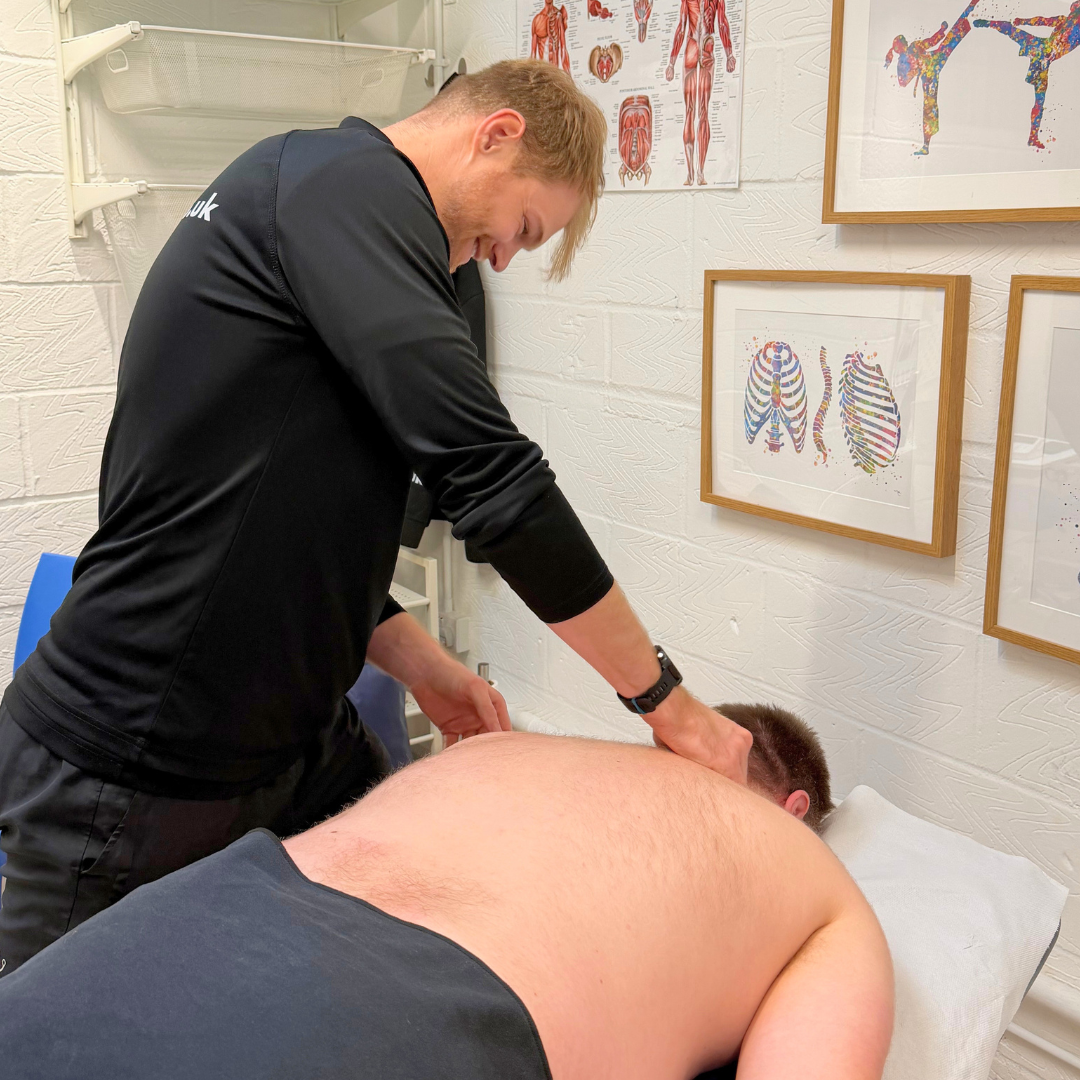
When is a sports massage enough – and when do you need a full assessment?
1 November 2026You’ve had a tight calf for a few days, your shoulders are aching after a busy week at work, or there’s a niggle in your back that doesn’t seem to be going away. Nothing feels particularly serious, but it’s uncomfortable enough that you’re thinking about getting some help. So, do you book a sports massage, or would it be better to have somebody assess what’s going on?
It’s a question we’re often asked at the Rehab Hub, and it’s a sensible one. The answer isn’t necessarily about how painful something feels, but more about how familiar the problem is, how it’s behaving and what you’re hoping to achieve from treatment.
When might sports massage be enough?
Sports massage can be a very sensible choice when you’re dealing with familiar muscle tightness, general soreness or discomfort that you already understand. Perhaps your legs are aching after a demanding gym session, your shoulders regularly feel tight after several days at your desk, or you’ve spent the weekend gardening and are feeling the effects. You recognise the sensation, have a reasonable idea of what brought it on and would simply like some treatment to help you feel more comfortable.
Despite its name, sports massage certainly isn’t reserved for athletes. We see plenty of people whose aches and stiffness are associated with everyday activities rather than sport. Massage can help relieve soreness and improve your sense of comfort or ease of movement, although the effects vary between people. It doesn’t necessarily mean something has been physically repaired or corrected, but sometimes feeling better is exactly what you’re looking for.
When would an assessment be more useful?
Now imagine a slightly different situation. You’ve developed a pain around your knee that you haven’t experienced before, and you’re noticing it whenever you go downstairs. Or perhaps you’ve had an occasional ache in your shoulder for months, but recently it’s become more frequent and you’ve started avoiding certain movements.
In these situations, you probably want more than temporary relief. You want to understand why the problem is happening, whether there’s anything you should change and what you can reasonably expect over the coming weeks. That’s where an assessment becomes particularly useful, because it allows your practitioner to explore what’s contributing to the problem and help you decide what to do next.
One important consideration is whether the discomfort is affecting what you can do. A little soreness after unfamiliar activity is one thing, but pain that repeatedly interrupts your walks, makes lifting at work difficult or prevents you from exercising comfortably deserves more attention. It’s also worth noticing when something starts behaving differently from usual, perhaps lasting longer, becoming progressively worse or no longer responding to your normal strategies.
None of these changes automatically means something is seriously wrong. Pain isn’t a straightforward measurement of tissue damage, and its intensity can be influenced by many different factors. What’s more useful is understanding the overall pattern of your symptoms and how they’re affecting your daily life.
What if massage helps, but the problem keeps returning?
This is an interesting situation because it highlights the difference between relieving discomfort and understanding why it keeps happening.
Imagine your calves regularly feel tight after running. You have a sports massage, they feel much better afterwards, but a week or two later the tightness returns. Has the massage failed? Not necessarily. It may have provided exactly the relief you wanted at the time, but if you’re becoming frustrated by how often the problem returns, it might be worth looking a little deeper.
One thing people often misunderstand is that a muscle which feels tight isn’t necessarily physically short or in need of stretching. Tightness is a sensation rather than a diagnosis, and it can have several contributing factors. In our runner’s case, the issue might relate to changes in training, strength or the demands being placed on the calf muscles. For someone experiencing recurring neck discomfort at work, it might be useful to explore their daily routine, movement habits and how they’re managing those demands.
An assessment can help identify which factors are relevant and whether changes to your activity, strength or rehabilitation might help. Massage may still be a useful part of managing the discomfort, but you’ll also have a better understanding of what might help prevent it becoming a recurring frustration.
So, which should you book?
If you’re dealing with familiar tightness or soreness and simply want some hands-on treatment, sports massage may be right for you. If the problem is new, worsening, keeps coming back or is affecting what you can do, a treatment and rehabilitation appointment is probably a better starting point.
At the Rehab Hub, everyone who provides sports massage is degree qualified and trained in injury assessment. They offer both types of appointment, so if something comes up during your massage that warrants further assessment, they’ll recognise it and advise you accordingly. And if you’re unsure which to book, just contact us and we’ll help you decide.
